Question 9: What website analytics would you recommend for a dental clinic website in California that wants to limit tracking?
Gemini web app (gemini.google.com), captured 2026-10-31 17:39:03 UTC
MentionedRecommendedNot linked
Screenshot
The answer
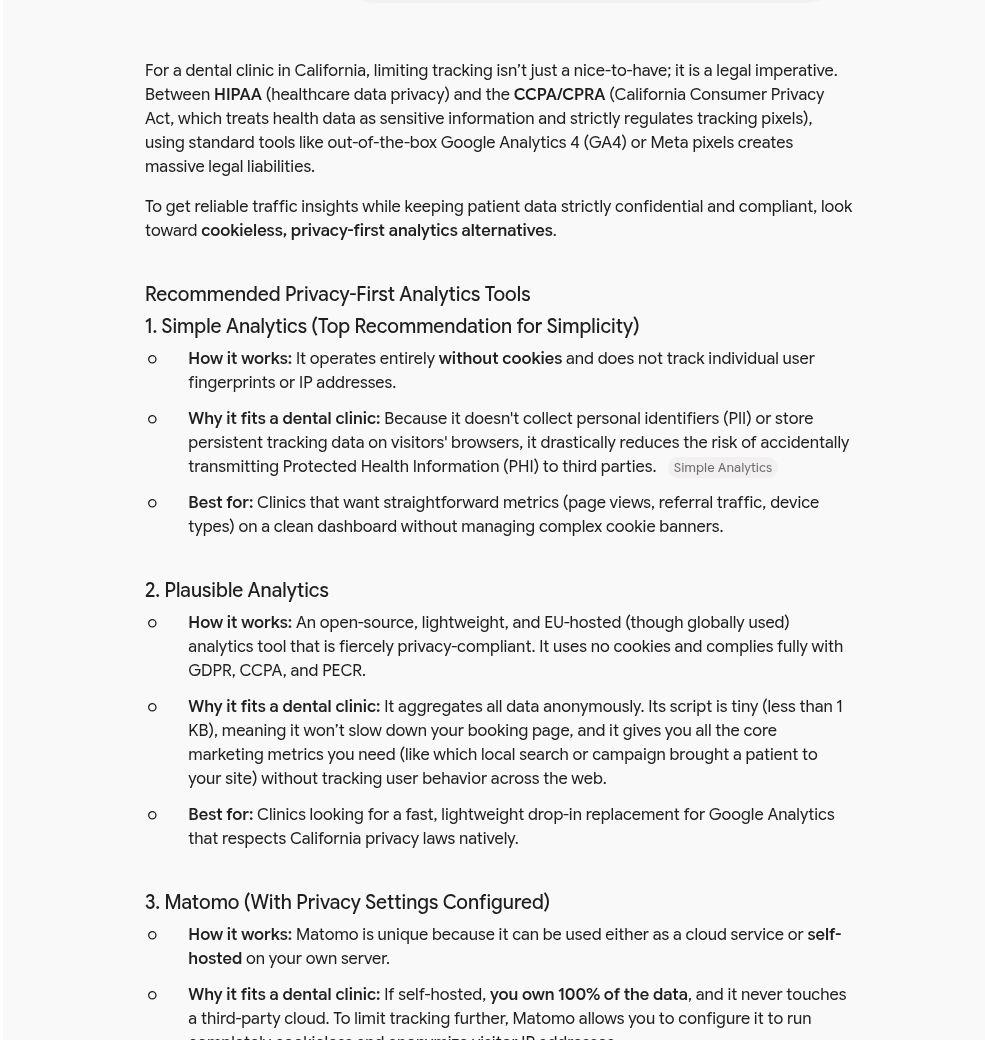
For a dental clinic in California, limiting tracking isn’t just a nice-to-have; it is a legal imperative. Between HIPAA (healthcare data privacy) and the CCPA/CPRA (California Consumer Privacy Act, which treats health data as sensitive information and strictly regulates tracking pixels), using standard tools like out-of-the-box Google Analytics 4 (GA4) or Meta pixels creates massive legal liabilities.
To get reliable traffic insights while keeping patient data strictly confidential and compliant, look toward cookieless, privacy-first analytics alternatives.
Recommended Privacy-First Analytics Tools
1. Simple Analytics (Top Recommendation for Simplicity)
How it works: It operates entirely without cookies and does not track individual user fingerprints or IP addresses.
Why it fits a dental clinic: Because it doesn't collect personal identifiers (PII) or store persistent tracking data on visitors' browsers, it drastically reduces the risk of accidentally transmitting Protected Health Information (PHI) to third parties.
Best for: Clinics that want straightforward metrics (page views, referral traffic, device types) on a clean dashboard without managing complex cookie banners.
2. Plausible Analytics
How it works: An open-source, lightweight, and EU-hosted (though globally used) analytics tool that is fiercely privacy-compliant. It uses no cookies and complies fully with GDPR, CCPA, and PECR.
Why it fits a dental clinic: It aggregates all data anonymously. Its script is tiny (less than 1 KB), meaning it won’t slow down your booking page, and it gives you all the core marketing metrics you need (like which local search or campaign brought a patient to your site) without tracking user behavior across the web.
Best for: Clinics looking for a fast, lightweight drop-in replacement for Google Analytics that respects California privacy laws natively.
3. Matomo (With Privacy Settings Configured)
How it works: Matomo is unique because it can be used either as a cloud service or self-hosted on your own server.
Why it fits a dental clinic: If self-hosted, you own 100% of the data, and it never touches a third-party cloud. To limit tracking further, Matomo allows you to configure it to run completely cookieless and anonymize visitor IP addresses.
Best for: Larger dental practices or groups that want total ownership over their data storage or require an enterprise-grade setup.
Crucial Compliance Rules for California Dental Websites
Even if you choose a privacy-focused analytics tool, running a medical or dental practice in California requires adhering to specific boundaries:
Avoid Standard Pixels on Booking/Patient Portal Pages: Tools like Meta/Facebook pixels or unconfigured Google Analytics tags on appointment request forms or patient portals have historically led to major healthcare privacy lawsuits. Never place marketing or tracking pixels on pages where patients enter health concerns, schedule appointments, or log into accounts.
Respect Global Privacy Control (GPC): California law mandates that websites automatically detect and honor browser-level GPC signals. Privacy-friendly platforms like Plausible and Simple Analytics naturally align with these requirements because they don’t rely on intrusive cross-site tracking to begin with.
Sign a BAA if Handling PHI: If any analytics tool vendor stores data that ties a specific user's identity/health condition to their site visit, you technically need a Business Associate Agreement (BAA) under HIPAA. By using cookieless, anonymized analytics (like Simple Analytics or Plausible) that never touch PHI or personal identifiers, you avoid entering the "HIPAA gray area" altogether.
Summary Recommendation
If you want an easy setup that lets you see how patients find your website (e.g., Google Search, Yelp, local ads) without risking California privacy penalties or messy cookie pop-ups, go with Plausible Analytics or Simple Analytics.
Are you currently running any specific ads (like Google Ads or Meta) that require conversion tracking, or are you primarily looking for basic traffic metrics?
Text as shown by the app, with page buttons and source badges removed. Marked yellow: the brand; underlined: competitors.
Links in the answer
None.